NIKKO QUIROGA日光
Irezumi / Horimono

Irezumi / Horimono

Horimono is not pasted onto the body. It is carved with the body.

I use the words irezumi and horimono carefully. They are not labels to sell an oriental-looking aesthetic. They name a way of thinking about cuts, background, symbols, breathing space and time.

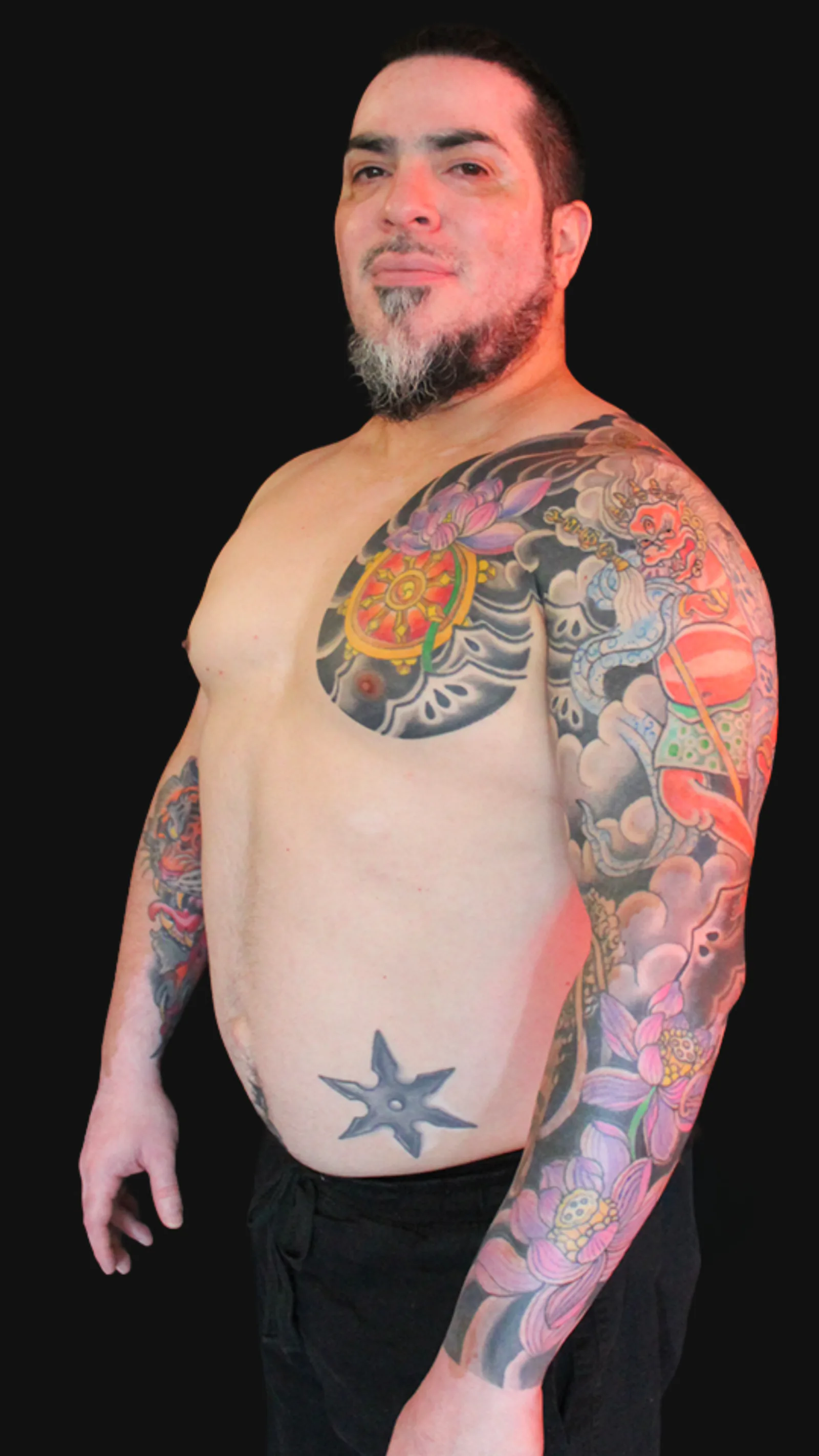
Irezumi sleeve tattoo by Nikko Quiroga in Olivos, Buenos Aires

A collage is easy. A visual path is not.

You can tell when a tattooer does not truly specialize in Japanese tattooing. The cuts feel forced, the background fights the main figure, and the eye does not know where to travel.

Horimono needs a path. The eye should enter, move, rest and return to the main figure. If the eye gets lost, the design gets lost too.

The background does not fill. It directs.

Water, clouds, wind, rocks and flowers are not filler. They support the main figure, create rhythm and give the tattoo its breath.

That is why part of the background is drawn by hand on the body. The body has volume, joints, tension and movement. The design has to listen.

Not everything belongs together

In Japanese tattooing, symbols have internal reasons. Following Horihide's school, for example, I do not pair dragons with peonies. Peonies belong to the Karajishi; chrysanthemums work better with dragons.

This is not a purist pose. It is respect for the language. If someone only wants to impose a reference, I may not be the right tattooer.

The eyes come last

In pieces with human or mythological figures, the eyes are tattooed at the end. This idea, Garyo Tensei, names the moment when the image comes to life.

I do not treat it as an exotic trick. It is a way of respecting the symbolic weight of the image.

Frequently asked questions

What is the difference between irezumi and horimono?

Irezumi is commonly used for Japanese tattooing. Horimono, literally something carved, emphasizes a piece designed with figure, background and body flow.

Do you copy reference images?

No. References can help orient the conversation, but I only tattoo my own designs.

What does tegaki mean?

Tegaki means hand drawing. In my process, part of the background is drawn directly on the body so it follows real movement.

If it is going to live on your body, it has to be thought through.

If you want a large Japanese piece that can age well, first we should talk about the story it needs to carry.

Talk about the project